
16
Jul

Most people don't think much about curtains until they're standing in a shop, staring at fifty fabric swatches, completely lost. Here's what trips homeowners up most:
Picking a fabric that doesn't suit the room
Hanging curtains too low or too short
Ignoring how they fit with the rest of the room
Forgetting curtains actually have a job to do (sleep, heat, sun damage)
Buying purely on looks, not on how they'll hold up
Here's the full breakdown, and how to actually get it right.
This is probably the single biggest visual mistake we see, and it's also the easiest one to fix.
Hang the rod about 15 to 20cm above the window frame, not right on top of it. It sounds like a small detail, but it genuinely makes the window look bigger and the ceiling higher. Let the rod run a little wider than the window frame too, so the curtains can be pulled fully open without covering the glass.
For length, aim for the curtain to just touch the floor. A slight puddle can look elegant in a formal dining room, but for anywhere with foot traffic, floor-skimming is more practical. Whatever you do, avoid leaving a gap between the curtain and the floor. That "floating" look is one of those things that instantly reads as unfinished, even if you can't quite put your finger on why.
As a rule of thumb, aim for your curtain width to be around two to three times the width of the window. Anything less and the fabric looks stretched and stingy when closed.
Curtains aren't something you pick in isolation. They sit between your walls and your furniture, so they need to actually talk to both.
If your rug or cushions already carry a pattern, a solid colour on the window keeps things calm. If your room is mostly neutral and a bit flat, a patterned curtain can be the thing that gives it some personality. This year, the palette leans earthy: olive, moss, beige, soft clay tones. They're forgiving colours that work with most existing decor.
Small details help too. Matching your curtain rings or rod finish to your door handles or light fittings makes a room feel considered rather than thrown together.
It's easy to focus purely on how curtains look and forget they're doing real work behind the scenes.
Blackout linings matter more than people think, especially in bedrooms. Light exposure at night interferes with melatonin, the hormone your body needs to wind down and sleep properly. If you've got a nursery, or someone in the house working night shifts, this isn't optional.
There's also the practical side: lined, heavier curtains help keep a room cooler in summer and warmer in winter, which takes some pressure off your air conditioning. And UV rays don't just affect your skin. They fade timber floors, leather furniture, and artwork over time. A good lining slows all of that down.
A gorgeous curtain that falls apart in a year, or one that needs professional dry cleaning every few months when you don't have time for that, isn't actually a good buy.
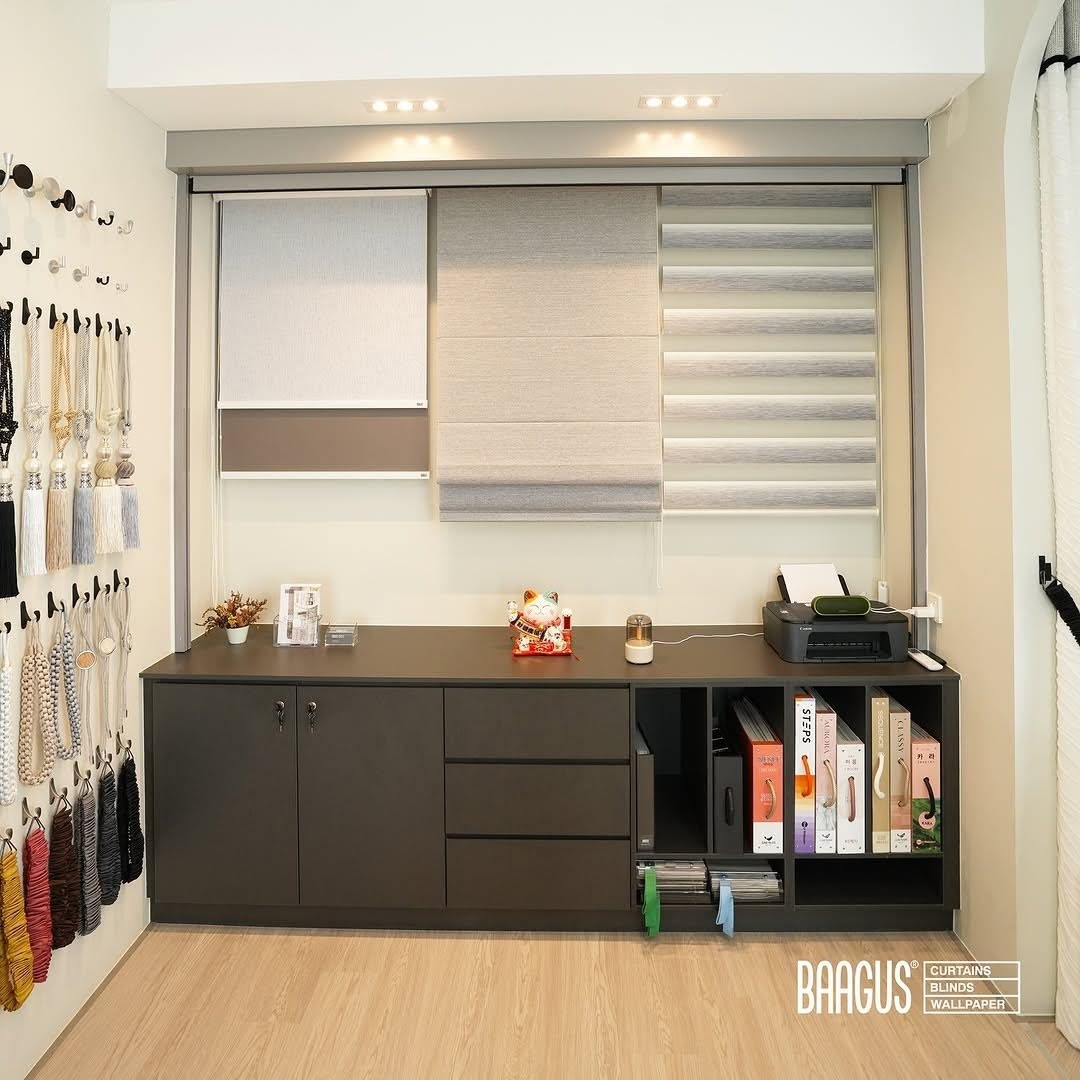
Check the care label before you commit, not after. Think honestly about how much sun and foot traffic the room gets. And if possible, hold the fabric swatch up in the actual room at the time of day you'll see it most. Showroom lighting flatters almost everything, which is exactly why so many people get home and think, "this looks nothing like it did in the store."
1. How do I clean my curtains?
It depends on the fabric. Heavier or pleated curtains usually need dry cleaning. Lighter cotton or synthetic ones can often handle a gentle machine wash, but always check the label first.
2. Can I mix curtain styles in one room?
Yes, and it's actually a popular look. Pairing a blind with a sheer curtain layered over it gives you flexibility for privacy and light. Just keep the colours in the same family so it doesn't look busy.
3. How long does installation usually take?
A professional install is usually done within a few hours. DIY takes longer since getting the brackets level and secure is fiddly, but worth doing properly the first time.
4. Are heavy curtains safe on plasterboard walls?
Yes, as long as you use proper wall anchors or fix into the studs behind the plasterboard. A regular screw on its own can pull out over time under the weight.
5. How often should curtains be replaced?
A good quality set can last ten years or more. Replace sooner if you're seeing noticeable fading, fraying, or you've simply outgrown the look.
If you'd rather skip the guesswork, the team at Baagus Curtains can help you find the right fit for your space. Contact us for personalised advice or to see the range in person.


|
SHOWROOMSGet up-close with our products and services at these showroom locations. VISIT US |

|
PROMOTIONSGet our latest promotions and deals here. LATEST PROMOTIONS |

|
GALLERYTrendy design concept from Baagus Curtain special made for your lovely home VIEW MORE |
 Chat with us on Whatsapp