22
Jul

Keeping your home clean is not only about floors, furniture and countertops. Window blinds also collect dust, pollen, pet hair, cooking residue and everyday dirt. If they are not cleaned properly, they can look dull, affect indoor air quality and shorten the lifespan of your window treatments.
However, cleaning window blinds requires the right method. Using too much water, harsh chemicals or rough scrubbing can damage fabric, timber, faux wood or coated surfaces. With the right routine, you can keep your blinds fresh, hygienic and beautiful without causing warping, staining or wear. For more home styling ideas, you can explore BAAGUS window treatment solutions for different rooms and lifestyles.
Fabric window blinds, such as Roman blinds or cellular blinds, need gentle care. These materials can add softness and warmth to a room, but they are more sensitive to moisture. Too much water may cause watermarks, mould or fabric distortion.
For fabric blinds, avoid soaking the surface. Use a vacuum with a soft brush attachment on low suction to remove dust. If there is a stain, blot it gently with a clean cloth instead of rubbing. Always allow the fabric to dry fully before raising the blind.
Timber blinds bring a natural and elegant look, but they should not be soaked. Excess moisture can cause real wood to swell, crack or warp. Use a dry microfibre cloth for regular dusting, followed by a slightly damp cloth only when needed.
Faux wood and PVC blinds are more resistant to moisture, making them suitable for kitchens, bathrooms and high-use spaces. They can usually be wiped with a damp cloth, but the surface should be dried immediately to prevent streaks and build-up.
The easiest way to maintain window blinds is to clean them regularly. Dust becomes harder to remove when it mixes with humidity, grease or air pollution. A quick weekly dusting can prevent stubborn grime and keep the room looking brighter.
Use these steps:
Close the blinds fully.
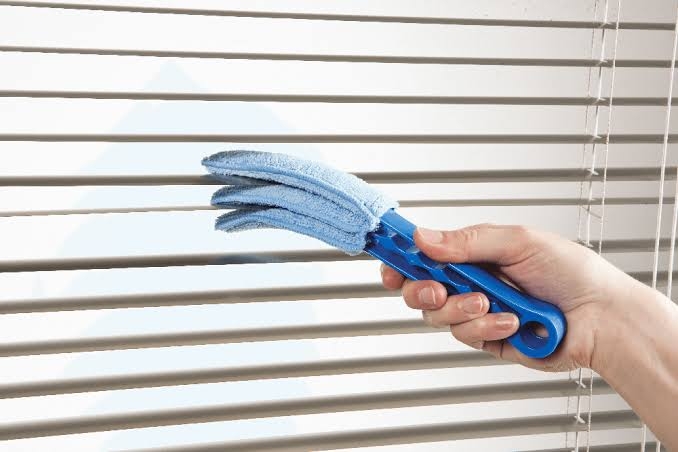
Wipe from top to bottom with a microfibre cloth.
Turn the slats in the opposite direction.
Repeat the wiping process.
Clean corners and cords with a small brush.
A microfibre cloth is ideal because it traps dust instead of pushing it back into the air. This is especially useful for allergy-sensitive homes.
Vacuuming is useful for larger blinds or fabric styles with folds. Use a soft brush attachment and low suction setting. Move slowly across the surface to avoid pulling or bending the material.
This method is helpful for bedrooms, living rooms and home offices where fine dust can build up quietly. If your window blinds are near open windows or busy roads, you may need to vacuum them more often.
When dusting is not enough, a mild cleaning solution can help remove grime. Mix a small amount of gentle dish soap with lukewarm water. Dip a soft cloth into the solution, wring it until only slightly damp, then wipe each slat carefully.
Avoid spraying water directly onto window blinds. Water can enter the headrail, damage internal parts or cause rust. After wiping, dry each slat with a clean towel.
Safe cleaning tips include:
Use mild soap only.
Avoid bleach or abrasive cleaners.
Never soak timber blinds.
Dry surfaces immediately.
Keep the blind lowered until fully dry.
Kitchen blinds often collect grease from cooking. This sticky layer can trap dust and make the surface look dull. For PVC, aluminium or faux wood blinds, use a mild degreasing solution and wipe gently.
Work from top to bottom so residue does not drip onto cleaned areas. If the grease is heavy, clean one slat at a time. For delicate materials, check the manufacturer’s care instructions or seek professional advice before using stronger products.
You can also browse BAAGUS blinds and curtains to compare materials that are easier to maintain for kitchens and active spaces.
Window blinds can trap dust, pollen and pet dander. Every time blinds are opened, closed or adjusted, these particles may move back into the air. This can irritate people with allergies, asthma or sensitive noses.
According to Allergy UK, reducing dust and allergens in the home can help support a healthier indoor environment. Regular cleaning of blinds, window frames and sills is one simple way to reduce build-up.
For better home hygiene:
Dust blinds weekly.
Clean window frames regularly.
Keep rooms well ventilated.
Avoid strong chemical cleaners.
Wash nearby curtains or soft furnishings when needed.
Clean window blinds allow more natural light to enter the room. Dust and grime can make blinds look grey, dull and aged. When cleaned properly, the whole space can feel brighter and fresher.
A clean window area also improves the overall look of your interior design. Whether your home style is modern, minimalist or cosy, well-maintained blinds help complete the room.
One of the biggest mistakes is using too much water, especially on timber or fabric blinds. Moisture can cause staining, mould, swelling or warping. Always use a lightly damp cloth and dry the surface quickly.
For fabric styles, avoid soaking and scrubbing. If stains are difficult to remove, professional cleaning may be safer.
Strong chemicals can damage coatings, fade colours or weaken fabric fibres. Abrasive sponges can also scratch slats and leave visible marks. Gentle cleaning products are usually enough for regular maintenance.
If you are unsure how to care for a specific blind type, you can contact BAAGUS Curtains for guidance on suitable materials and long-term care.
The best method depends on the material. For most window blinds, regular dusting with a microfibre cloth and occasional wiping with a slightly damp cloth is safe and effective.
This is not recommended for timber or fabric blinds. It may only be suitable for some plastic or aluminium blinds, but even then, drying must be done carefully to prevent rust or damage.
A light dusting once a week is ideal. Deep cleaning can be done every three to six months, depending on dust, pets, cooking residue and room usage.
Steam cleaning can damage certain fabrics by causing shrinkage, watermarks or loss of shape. Always check care instructions before using steam.
Blot stains gently with a clean cloth and mild detergent. Do not scrub or soak the fabric. For stubborn stains, professional cleaning is safer.
Cleaning window blinds the right way helps protect their appearance, function and lifespan. The key is to understand the material before choosing a cleaning method. Fabric blinds need gentle vacuuming and spot care, while faux wood, PVC and aluminium blinds can usually be wiped more easily. Avoid harsh chemicals, excessive water and rough scrubbing to prevent damage.
A simple routine can make a big difference. Weekly dusting, occasional deep cleaning and careful stain removal will keep your window blinds looking fresh and your home feeling healthier. Visit BAAGUS stores near you and find some ideas from our blog page.





|
SHOWROOMSGet up-close with our products and services at these showroom locations. VISIT US |

|
PROMOTIONSGet our latest promotions and deals here. LATEST PROMOTIONS |

|
GALLERYTrendy design concept from Baagus Curtain special made for your lovely home VIEW MORE |
 Chat with us on Whatsapp